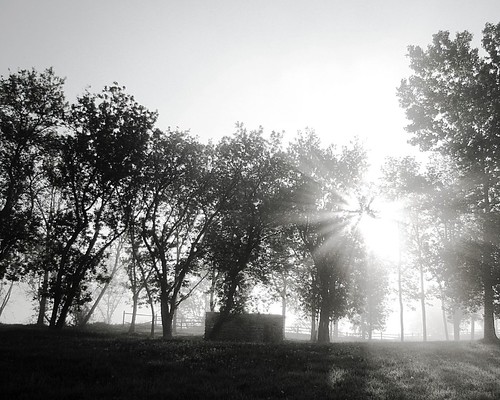
Have patience with all things, but chiefly have patience with yourself. Do not lose courage in considering your own imperfections but instantly set about remedying them - every day begin the task anew.
-- Saint Francis de Sales

Have patience with all things, but chiefly have patience with yourself. Do not lose courage in considering your own imperfections but instantly set about remedying them - every day begin the task anew.
-- Saint Francis de Sales


Every day you may make progress. Every step may be fruitful. Yet there will stretch out before you an ever-lengthening, ever-ascending, ever-improving path. You know you will never get to the end of the journey. But this, so far from discouraging, only adds to the joy and glory of the climb.
-- Sir Winston Churchill
Photo by Dany_photographer

Cultivating mindfulness is not unlike the process of eating. It would be absurd to propose that someone else eat for you. And when you go to a restaurant, you don’t eat the menu, mistaking it for the meal, nor are you nourished by listening to the waiter describe the food. You have to actually eat the food for it to nourish you. In the same way, you have to actually practice mindfulness in order to reap its benefits and come to understand why it is so valuable.
-- John Kabat-Zinn, from Letting Everything Become Your Teacher: 100 Lessons in Mindfulness
Photo by akhater

Courage is resistance to fear, mastery of fear - not absence of fear.
-- Mark Twain
Photo by theshanghaieye
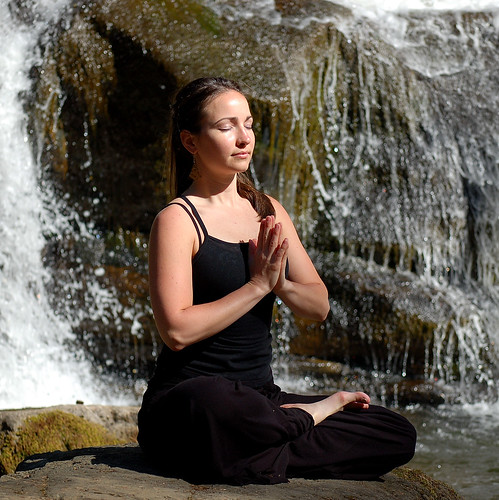
Human beings, by changing the inner attitudes of their minds, can change the outer aspects of their lives.
-- William James
Photo by m_weighill

Nothing is really work unless you would rather be doing something else.
-- James M. Barrie
Photo by derek n nitsa

Our main business is not to see what lies dimly at a distance but to do what lies clearly at hand.
-- Thomas Carlyle
Photo by **amber_**

You cannot run away from a weakness; you must sometimes fight it out or perish. And if that be so, why not now, and where you stand?
-- Robert Louis Stevenson
Photo by HaMeD!caL

For one human being to love another:
that is perhaps the most difficult task of all…
the work for which all other work is but a preparation.
It is a high inducement to the individual to ripen…
a great exacting claim upon us, something
that chooses us out and calls us to great things.
-- Rainer Maria Rilke
Photo by Santokh Singh
There are admirable potentialities in every human being. Believe in your strength and your youth. Learn to repeat endlessly to yourself, 'It all depends on me.'
-- Andre Gide (1869 - 1951)
Photo by Karl's
The excellency of every art is in its intensity, capable of making all disagreeables evaporate.
-- Keats
Photo by yogi_johann

It is not enough for an activity to satisfy your desire for knowledge, bring you joy, or make you calmer and more relaxed. In every activity you must look for an opportunity to perfect yourself and become free inside. Yet even the manner in which humans practise art and science, as well as religion, betrays the fact that they are not really looking for a means of self-perfection. You will ask, ‘But what does perfecting yourself mean, then? What must we do to succeed?’ Perfecting yourself means to change the quality of your vibrations, so that you make them more intense or, in other words, more spiritual.
Everything lies in the intensity of your thoughts, feelings and the life within you; that is what initiatic Science reveals to us. Once human beings manage to live this intense life, all their activities, physical as well as spiritual, will only contribute to their evolution.
-- Omraam Mikhaël Aïvanhov
Photo by fensterbme
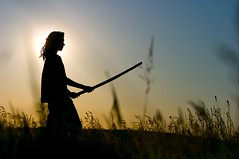
Foster and polish
The warrior spirit
While serving in the world;
Illuminate the path
According to your inner light.
- Morihei Ueshiba
Photo by Mazzaroth

Real, constructive mental power lies in the creative thought that shapes your destiny, and your hour-by-hour mental conduct produces power for change in your life. Develop a train of thought on which to ride. The nobility of your life as well as your happiness depends upon the direction in which that train of thought is going.
-- Laurence J. Peter (1919 - 1988)
Photo by M.Orellana
Strength doesn't come from physical capacity. It comes from indomitable will.
-- Mahatma Gandhi
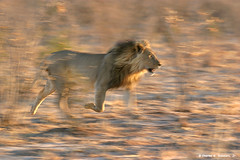
Every morning in Africa a gazelle awakens knowing it must today run faster than the fastest lion or it will be eaten. Every morning a lion awakens knowing it must outrun the slowest gazelle or it will starve. It matters not whether you are a gazelle or a lion, when the sun rises you had better be running.
-- African Proverb

He who cannot obey himself will be commanded. This is the nature of living creatures.
-- Friedrich Nietzche
When a man disciplines his diet
and diversions, his physical actions,
his sleeping and waking,
discipline destroys his sorrow.
-- The Bhagavad Gita
Perhaps one of the most clear examples of the practice of tapas is marriage. Marriage requires commitment, consistency and love. Without any of these three things, marriage does not work. When these qualities are present however, we can celebrate the good days and hang on through the bad ones.
Tapas requires the same things. When we bring a commitment born of love to our consistent practice of yoga, we are practicing the niyama of tapas. It is with this spirit of abiding in the midst of difficulty which is at the heart of tapas.
-- Judith Hanson Lasater


